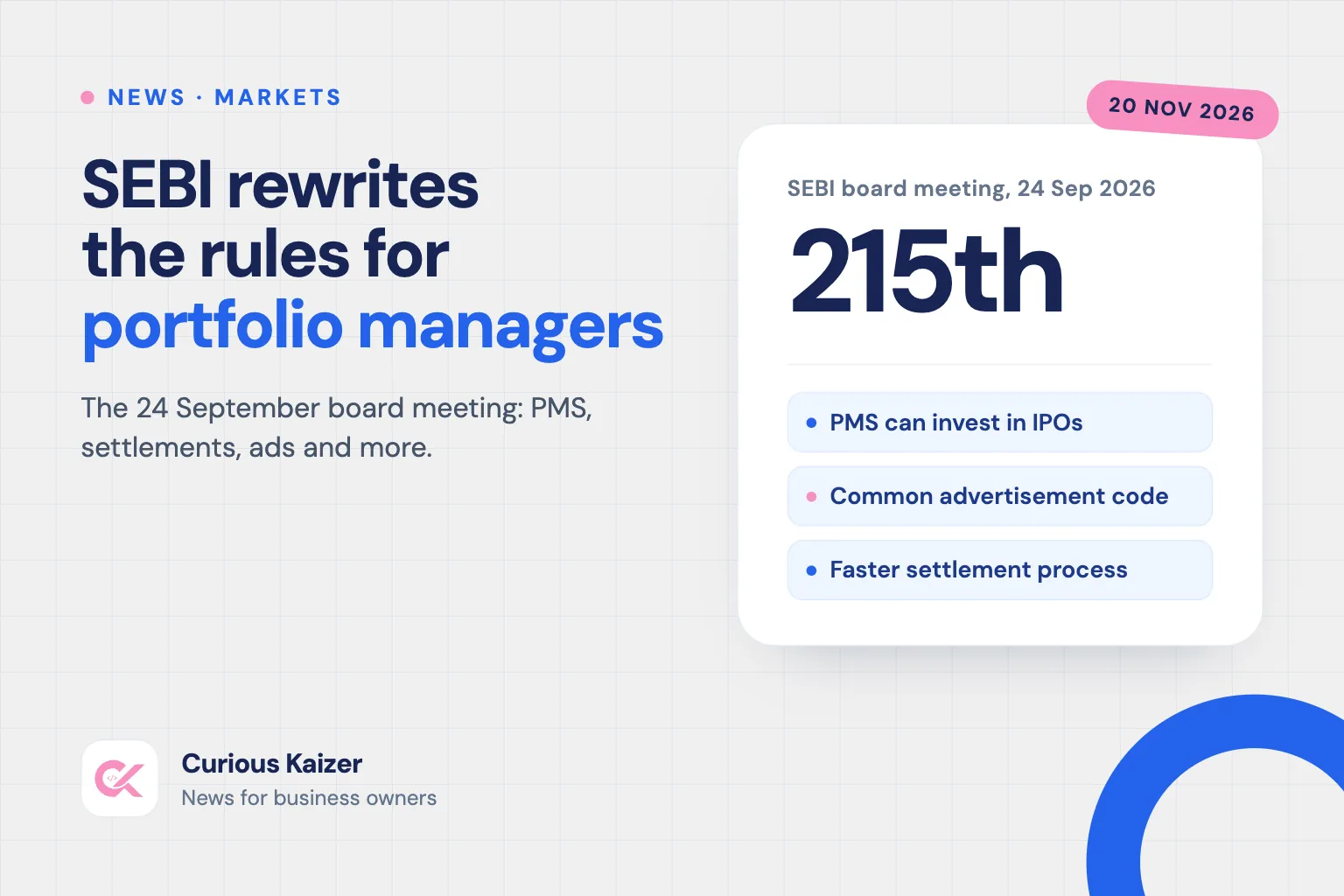
At its 215th board meeting on 24 September 2026, the Securities and Exchange Board of India approved a new set of rules for portfolio managers, replacing the 2020 regulations, along with a string of other changes. Some affect wealthy investors and fund managers directly; one, a common code for advertising, matters to anyone who markets financial products.
Key points
- SEBI approved the Portfolio Managers Regulations 2026, replacing the 2020 rules.
- Portfolio managers will be able to invest in IPOs, specified unlisted debt and foreign securities.
- A new settlement regime sets a 90-day window for filing settlement applications and a fast-track route.
- Foreign portfolio investors get access to commodity derivatives, and depository receipts on REIT and InvIT units are allowed.
- A common advertisement code for regulated entities was approved, along with changes for accredited investors and bullion vaults.
The new portfolio manager rules
Portfolio management services (PMS) run individual investment portfolios for wealthier clients, usually with a minimum investment of ₹50 lakh. The new regulations widen what portfolio managers can invest in, including IPOs, certain unlisted debt securities and foreign securities, and update the rules on how they operate and report. Detailed circulars will set out how each change applies.
Other decisions
| Area | Change |
|---|---|
| Portfolio managers | New PMS Regulations 2026 replace the 2020 rules |
| Settlements | 90-day filing window and a fast-track settlement route |
| Foreign investors | FPI access to commodity derivatives |
| REITs and InvITs | Depository receipts on units allowed |
| Advertising | Common advertisement code for regulated entities |
| Other | Changes for accredited investors and bullion vaults |
Earlier, at its 214th meeting on 19 June 2026, SEBI reintroduced open-market share buybacks through stock exchanges from 1 August 2026.
Why the advertising code matters
SEBI has been tightening rules on how financial products are promoted, including through finfluencers and online ads. A common advertisement code means brokers, advisers, fund managers and other regulated entities follow one set of standards. If you build websites, apps or campaigns for financial firms, expect stricter reviews of claims, disclaimers and performance figures.
What it means for businesses
For most small businesses, the direct effect is small. If you work with financial services clients, the message is clear: compliance is part of the design brief. Clear disclaimers, no promises of returns, and careful use of past performance belong in every landing page and ad. We build pages for regulated clients with this in mind.
Questions readers ask
What are the SEBI PMS Regulations 2026?
New rules for portfolio management services, approved at SEBI's board meeting on 24 September 2026, replacing the 2020 regulations and widening what portfolio managers can invest in.
Can PMS invest in IPOs now?
Under the new regulations, portfolio managers will be able to invest in IPOs, subject to detailed rules SEBI will publish.
What is SEBI's common advertisement code?
A single set of advertising standards for SEBI-regulated entities, approved at the September 2026 board meeting.
Sources and method
We report what official releases, company filings and established news outlets published up to 20 November 2026, and say so where reports differ. Figures can be revised; check the original source before you act on them.
- Securities and Exchange Board of India, press release on the 215th board meeting, 24 September 2026.
- SEBI press release on the 214th board meeting, 19 June 2026.
- Coverage by Indian business and legal media, September 2026.
This is news and general information for business owners, not investment, tax or legal advice.
Building for a regulated client?
We design websites and apps for finance businesses with compliance built in: disclaimers, consent and careful claims.