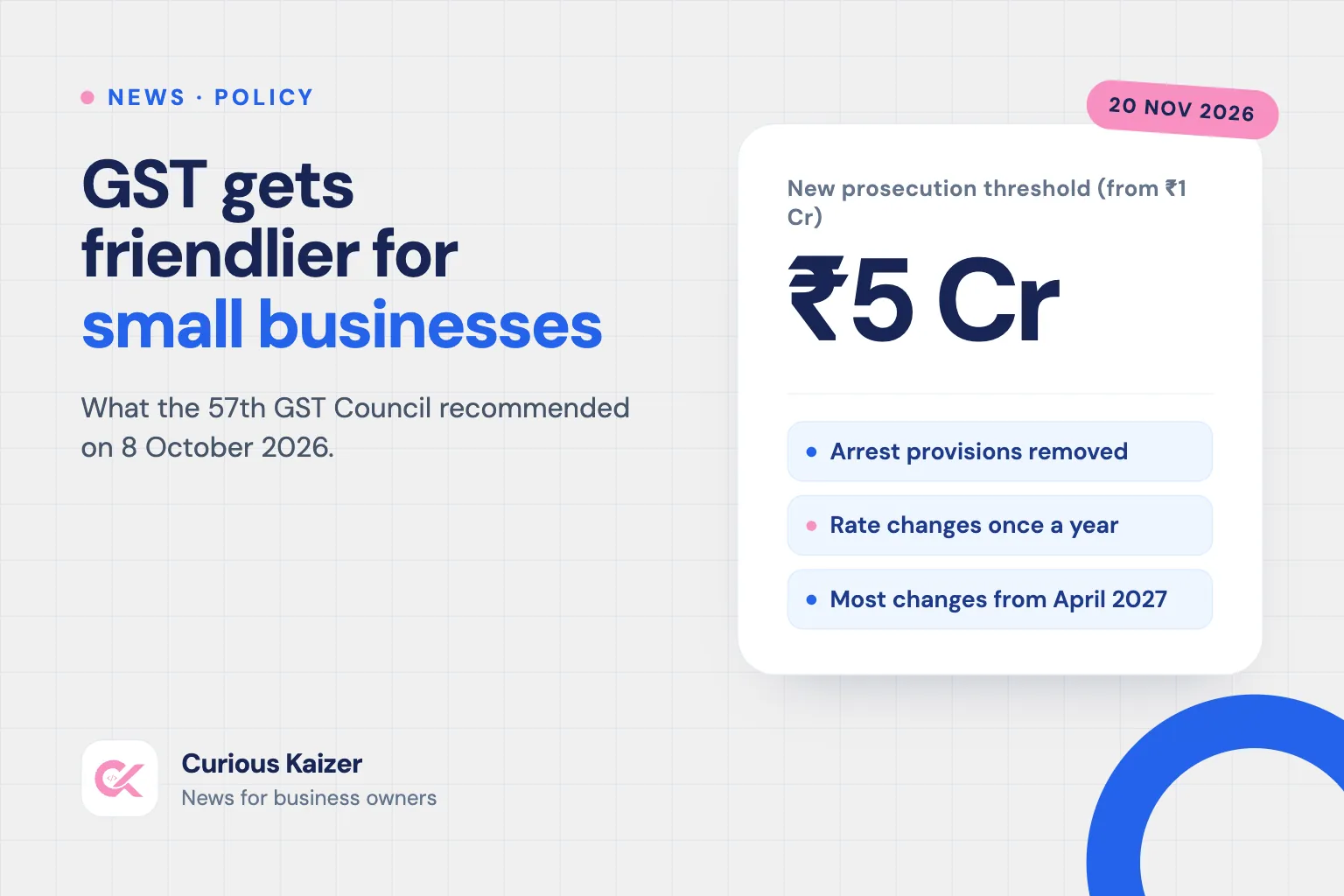
The GST Council's 57th meeting, held in New Delhi on 8 October 2026, focused on how GST is administered rather than on rates. It recommended removing the power to arrest under GST, raising the threshold for prosecution from ₹1 crore to ₹5 crore, simplifying registration for small e-commerce sellers, and changing rates only once a year. Most changes are expected from 1 April 2027.
Key points
- The Council recommended removing arrest provisions from GST law.
- The threshold for prosecution would rise from ₹1 crore to ₹5 crore.
- Small e-commerce sellers would get simplified registration.
- There were no rate changes. Rate decisions will be taken once a year, effective from the start of the next financial year.
- Process reforms cover registration, returns, refunds and adjudication. Most changes are expected from 1 April 2027, once laws are amended.
The main decisions
| Area | Recommendation |
|---|---|
| Arrests | Remove arrest provisions |
| Prosecution | Threshold raised from ₹1 crore to ₹5 crore |
| E-commerce sellers | Simplified registration for small sellers |
| Rates | No changes; future rate decisions once a year, from the next financial year |
| Processes | Reforms to registration, returns, refunds and adjudication |
| Timing | Most changes from 1 April 2027 |
How it builds on 2025
The previous big reform came at the 56th meeting in September 2025, which moved GST to a simpler structure of two main rates, 5% and 18%, plus a 40% rate for so-called demerit goods, effective from 22 September 2025. It also exempted individual life and health insurance. The 57th meeting turns from rates to the experience of complying.
Why it matters
- Less fear. The threat of arrest over GST disputes, however rare, weighed on small businesses. Removing it and raising the prosecution threshold treats most disputes as civil matters.
- Predictable rates. Changing rates once a year, from the start of a financial year, means fewer mid-year price and software updates.
- Easier online selling. Simpler registration should help small sellers on marketplaces and their own websites.
What to do
Nothing changes until the law is amended and notified, so keep complying as now. Use the time to clean up your GST data: matching invoices with purchase records, reconciling input tax credit and keeping e-invoicing and e-way bills tidy. If you sell online, check how your store handles GST on invoices, so that when registration rules ease, scaling up is straightforward.
Questions readers ask
What did the 57th GST Council meeting decide?
It recommended removing arrest provisions, raising the prosecution threshold from ₹1 crore to ₹5 crore, simplifying registration for small e-commerce sellers and changing rates only once a year. There were no rate changes.
When will the GST changes apply?
Most are expected from 1 April 2027, after the necessary amendments to GST laws.
What are the current GST rates?
Since 22 September 2025, the main rates are 5% and 18%, with a 40% rate for certain demerit goods.
Sources and method
We report what official releases, company filings and established news outlets published up to 20 November 2026, and say so where reports differ. Figures can be revised; check the original source before you act on them.
- GST Council, press release on the 57th meeting, 8 October 2026.
- Coverage of the 57th GST Council meeting by Indian business media, October 2026.
- GST Council press release on the 56th meeting, September 2025.
This is news and general information for business owners, not investment, tax or legal advice.
Invoices that get GST right
We build stores and billing tools that calculate GST correctly, generate e-invoices and keep records audit-ready.