What actually drives the cost of an app
Two apps that look alike on a phone can sit lakhs apart underneath. These are the decisions that move the price, and each is worth settling in your brief before anyone quotes.
Screens and the states behind them
A screen that only shows information is cheap. A screen with a form, validation, a loading state, an empty state and an offline state is several screens' worth of work. Ask each supplier how it counts a screen.
Logins, roles and identity checks
Phone OTP login, separate customer, staff and admin roles, and identity checks such as KYC all add design, security work and testing. OTP login and KYC are listed on our Full Software & App tier, and Club Re Straddle, a private club system we built, has member profiles with KYC badges.
Payments and money movement
A payment can be pending, failed, refunded or paid twice, and the app needs a clear state for each. Total Fitness takes payments through Razorpay and ships through Shiprocket, and WatFix CRM turns a quotation into a GST invoice with CGST and SGST. Every gateway, invoice rule and refund path is a line in the scope.
Live features and outside services
Live order tracking, chat, push notifications, maps and SMS OTP each depend on a service you pay for, and on code that copes when that service is slow. WatFix CRM sends messages through the WhatsApp Cloud API. An integration like that needs coordinating and testing before launch.
Platforms and technology
Android, iOS or both, built natively, built in Flutter, or delivered as a PWA. This is the largest single fork in the budget, so it has its own section below.
Backend, admin panel and design
The server, the database and the screens your own team uses to run the business are often a large share of the project. A custom design with bespoke motion costs more than a clean, standard one. If design is a separate need, see our UI and UX design service.
Testing and store release
The app has to work across phones and OS versions, including inexpensive Android devices, and then pass each store's review. Both belong in the quote.
What other publishers quote, and why the numbers disagree
The ranges below belong to the named publishers. They are not Curious Kaizer quotes. All four guides are published by Indian software or digital companies, so read them as vendor estimates, not independent surveys. We read each page on 2 November 2026.
| Guide | Simple app | Medium app | Complex or enterprise | MVP |
|---|---|---|---|---|
| GoMilestone, published 18 April 2026 | ₹2 lakh to ₹10 lakh (login, 10 to 20 screens, basic admin panel) | ₹10 lakh to ₹25 lakh | ₹25 lakh to ₹40 lakh or more | ₹2 lakh to ₹10 lakh |
| PS Digitise, published 6 May 2026 | ₹75,000 to ₹2.5 lakh (5 to 8 screens) | No separate tier. A business app of 10 to 20 screens is ₹2 lakh to ₹3 lakh | ₹10 lakh or more for a complex marketplace or enterprise app, in its quick answer | ₹75,000 to ₹2.5 lakh |
| IT Guru Solutions, updated 13 October 2026 | ₹2.5 lakh to ₹5 lakh | ₹12 lakh to ₹22 lakh | ₹22 lakh to ₹45 lakh or more | ₹5 lakh to ₹12 lakh |
| Codingclave, updated 18 October 2026 | ₹50,000 to ₹1.5 lakh (5 to 10 screens, no login, no server of its own) | ₹1.25 lakh to ₹4 lakh (OTP login, backend API, payments, push, admin panel) | Complex ₹4 lakh to ₹12 lakh. Enterprise ₹10 lakh to ₹50 lakh | No standalone figure |
Read down any column and the gap is wide. A medium app is ₹1.25 lakh to ₹4 lakh at Codingclave and ₹10 lakh to ₹25 lakh at GoMilestone, although both describe a mix of login, payments, push notifications and an admin panel. The difference lies in what each counts as one app (screens, platforms, backend, design, testing), plus the hours assumed and the hourly rate charged. Codingclave's guide lists freelancers at ₹400 to ₹1,200 per hour and agencies in Bengaluru, Mumbai or Gurugram at ₹1,500 to ₹3,000, so the same hours can be priced very differently. Ask what is inside a number before you compare it with another.
Food delivery and e-commerce examples
Many buyers search for a specific kind of app. Three of the guides give figures by app type, and they differ in the same way.
| App type | Figure | Whose figure |
|---|---|---|
| Restaurant food ordering and delivery app | ₹3 lakh to ₹6 lakh | PS Digitise |
| Food delivery MVP: three apps plus an admin panel | ₹10 lakh to ₹17 lakh | Codingclave |
| Food delivery with live tracking and more | ₹17 lakh to ₹29 lakh | Codingclave |
| Single-seller e-commerce app | ₹2.5 lakh to ₹8 lakh | Codingclave |
| E-commerce app, listed in its medium tier | ₹10 lakh to ₹25 lakh | GoMilestone |
The food delivery rows are a good example of the problem. One figure is for a restaurant ordering and delivery app. The others describe a three-app system with an admin panel, then live tracking on top. Neither is wrong, but they are different products.
Native, Flutter or PWA: what changes in the cost
This is the choice buyers ask about first. The table compares the three routes on what you get and when each one makes sense.
| Route | What you get | Cost direction | Choose it when |
|---|---|---|---|
| Native (Swift for iOS, Kotlin for Android) | Two separate apps, each built for its own platform | Highest if you need both platforms | The app leans on device features, or one platform clearly dominates your users |
| Flutter | One codebase that ships as an iOS app and an Android app | Lower than two native apps | You want both stores from one team and one budget |
| PWA | A web app that opens from a link and can be added to the home screen | Lowest of the three | You want to test demand first, or customers already reach you through links and WhatsApp |
What the guides say about the difference
| Guide | Figures |
|---|---|
| GoMilestone | Flutter or React Native for both platforms: ₹2 lakh to ₹18 lakh, which it says saves 25 to 35%. |
| PS Digitise | Native iOS and Android together: ₹5 lakh to ₹20 lakh. Flutter for both: ₹1 lakh to ₹14 lakh. React Native for both: ₹75,000 to ₹12 lakh. |
| Codingclave | Cross-platform saves 30 to 40% against two native apps. In its worked example, a Flutter app at ₹2 lakh compares with ₹2.8 lakh to ₹3.4 lakh for both native apps and ₹80,000 to ₹1.2 lakh for a PWA. |
Cross-platform saves money by sharing code. Design, backend, device testing and store release still have to be done. A PWA is the cheapest route in these guides, but it opens from a link and what it can do on an iPhone differs from Android, so check the features you need before choosing it. React Native appears in the guides, but it is not in our published stack. Our cross-platform route is Flutter, alongside native Swift for iOS and Kotlin for Android. For how we would plan and build the app, see our mobile app development company in Delhi page. If your users mostly work in a browser, web application development may serve you better than a store app.
Is Android or iOS cheaper to build?
The guides do not agree. PS Digitise lists native Android at ₹1.5 lakh to ₹8 lakh and native iOS at ₹2 lakh to ₹10 lakh. GoMilestone lists Android at ₹2 lakh to ₹20 lakh and iOS at ₹2 lakh to ₹25 lakh. Codingclave's worked example prices a single-platform build the same on either side. Scope moves the budget more than the platform label does, so pick the platform by where your users are.
What the backend and admin panel add
Most of an app's logic does not run on the phone. Accounts, orders, payment status, notifications and permissions live on a server and in a database, and your team manages them through admin screens. A quote for "an app" may or may not include these, so ask.
| Item | Figure | Whose figure |
|---|---|---|
| Web admin panel | ₹50,000 to ₹1.5 lakh | PS Digitise |
| Web admin panel | ₹60,000 to ₹2 lakh | Codingclave |
| Hosting on Firebase | ₹0 to ₹8,000 per month | PS Digitise |
| Hosting on AWS or Google Cloud | ₹3,000 to ₹20,000 per month | PS Digitise |
| Hosting and servers | ₹5,000 to ₹50,000 per month | GoMilestone |
None of the four guides prices the backend build on its own. It sits inside their app figures, which is another reason to ask exactly what a quote includes. On our side, the Full Software & App tier lists a real-time database with daily backups, a custom UI and an admin portal. Depending on the project we build on Node.js, NestJS, FastAPI or Django, with PostgreSQL, Supabase or Firebase for data. Our backend development page covers the API, database and integrations behind an app, and SaaS development applies if the app is one face of a subscription product.
What we have built that carries over to an app
We have not published an App Store or Play Store app, so we do not claim one. What we can show is the work behind an app's screens: accounts, payments, messaging and admin tools. These two projects from our portfolio are the closest examples. The images show a website and a CRM, not store apps.
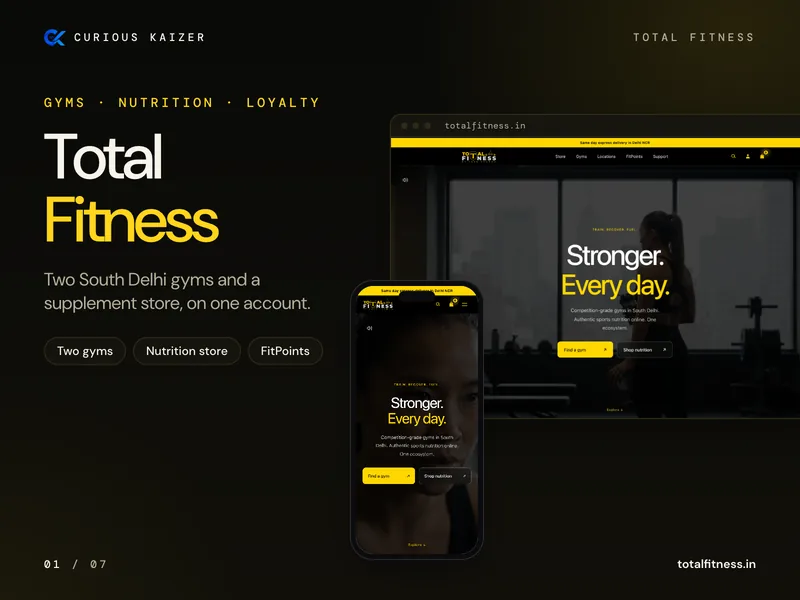
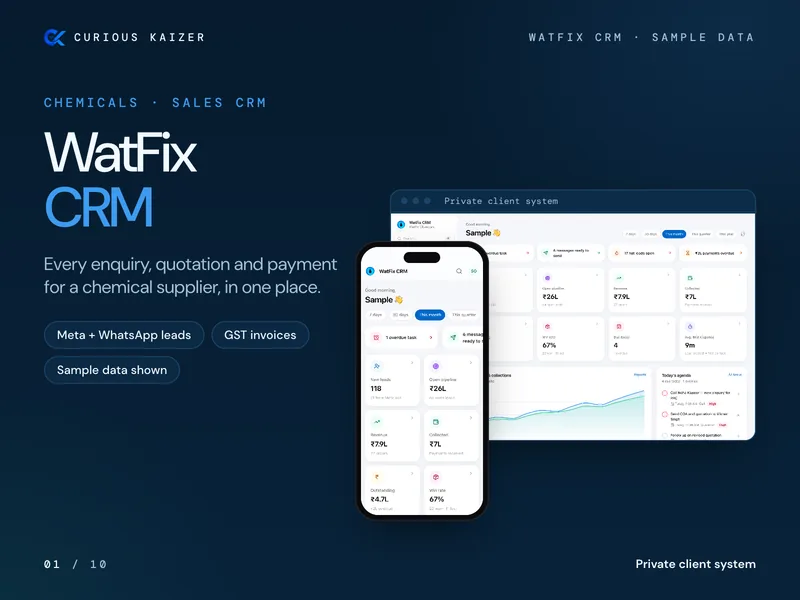
In an app, the same building blocks appear as an OTP sign-in, a payment screen, a member area, notifications and the admin panel your team uses every day.
Store fees from Apple and Google
These figures come from Apple's and Google's own pages, read on 2 November 2026. Both change, so check the linked page before you budget.
| Fee | What the page says | Source |
|---|---|---|
| Apple Developer Program | US$99 per membership year. Prices may vary by region and are shown in local currency during enrolment. | Apple |
| Google Play Console registration | US$25, one time. | |
| Apple commission, Small Business Program | A reduced 15% on paid apps and in-app purchases, for developers whose proceeds stay within US$1 million. | Apple |
| Google Play service fees | Depends on the market, the type of sale and the developer programme. We state no figure, so read the current fee page for your case. |
Commission applies to digital content sold inside an app, such as subscriptions and premium features. Google's payments policy says Play billing is not required for physical goods or physical services, and it names food delivery as one example. Apple's App Review Guidelines (3.1.3(e)) say physical goods and services consumed outside the app use payment methods other than in-app purchase. So a food, retail or booking app usually collects payment through a gateway such as Razorpay and pays that gateway's fee instead. Check both policies against your own model before you fix any pricing.
Google's help page also says personal developer accounts have testing requirements to meet before an app can go live. Read the current rules on Google's registration page and allow time for them. Store review times are not fixed, so no developer can promise an approval date.
What you pay after launch
The build fee is the first bill, not the last. Plan for the items below and check which account each one sits in.
| Cost | How often | Figure | Whose figure |
|---|---|---|---|
| Maintenance, bug fixes, OS updates | Yearly | 15 to 20% of the build cost | All four guides: GoMilestone, PS Digitise, IT Guru Solutions, Codingclave |
| Apple Developer Program | Yearly | US$99 | Apple |
| Google Play registration | Once | US$25 | |
| Cloud hosting for the backend | Monthly | ₹3,000 to ₹20,000 on AWS or Google Cloud | PS Digitise |
| Our managed cloud hosting | Monthly | ₹2,500, ₹5,000 or ₹8,000 per month | Curious Kaizer |
| Maps and other services for a food delivery app at 10,000 orders a month | Monthly | ₹15,000 to ₹50,000 | Codingclave |
| SMS OTP, push notifications, payment gateway fees | Per use or monthly | Set by each provider | Check each provider's rate card |
As arithmetic on the guides' percentage, not a quote: on a ₹10 lakh app, 15 to 20% is ₹1.5 lakh to ₹2 lakh a year, before the Apple fee, hosting and outside services. Ask any supplier what its support period includes and what it costs after that, and get the terms in writing.
How to reduce the cost without breaking the app
Saving money on an app means removing scope, not removing quality. These are the cuts that are usually safe.
- Release one core journey first. PS Digitise and Codingclave both put an MVP at 40 to 60% of the full product's cost. Add the second and third journeys after real users have tried the first.
- Start on one platform, or in one Flutter codebase. Two native apps are the most expensive route to both stores.
- Test demand with a PWA. If customers already reach you through links and WhatsApp, a web app can show whether they will use it before you pay for store apps.
- Keep the first admin panel small. Orders, users and refunds are enough at launch. Reports can wait.
- Buy services, do not build them. Use ready payment, SMS, maps and notification services rather than writing your own.
- Settle design and content before the build starts. Changing screens after they are built costs more than changing them in a design file.
Do not cut these to save money:
- Login security, role permissions and backups.
- Payment testing, including pending, failed and refunded states.
- Testing on real phones, including an inexpensive Android device.
- Store requirements such as the privacy policy and data declarations.
- Ownership of the source code, the repository and the store accounts.
How to read a quote, and what to walk away from
Send every supplier the same brief and ask for the answers in writing. Compare quotes line by line, not by total. A low quote that leaves out the backend, testing and store release is a different product from a higher one that includes them.
Questions to put to each quote
- Which platforms, and which technology: Swift, Kotlin, Flutter or a PWA?
- How many screens and user roles, and what counts as a screen?
- Is the backend, database and admin panel in the price, or listed separately?
- Which outside services does it assume, and who pays them each month?
- Is store submission included, with listing material and data declarations?
- Which devices and OS versions are tested?
- Who owns the source code, the repository and the developer accounts?
- What are the milestones, and what is paid at each?
- What support follows launch, and on what written terms?
Red flags
- A price quoted before anyone has asked what the app does.
- No written scope, or a scope that says "as required".
- The backend, admin panel, testing or store release is never mentioned.
- The developer registers the store accounts in its own name, or keeps the source code.
- A promise of an approval date from Apple or Google, or of downloads or rankings.
- A quote far below every range in this guide for the same scope, with no account of what has been left out.
- An app that is a re-skinned ready-made script, with no explanation of who maintains it or whether you receive the source code.
- Full payment requested up front, with no milestones.
Our published prices, and what you own
We do not publish a separate price for mobile apps. The table lists our published starting points, which are our own prices and say nothing about what another supplier charges. The Full Software & App tier is a web application tier, so its timeline does not set the date for a store app.
| Option | Our price | Stated timeline | Useful for |
|---|---|---|---|
| Prototype sprint | From $200 | 48 hours, one revision round | Testing or pitching an app idea before a full build |
| Full Software & App tier | From $750 | 2 to 3 weeks | Production web software with OTP login, KYC, billing and an admin portal |
| SaaS or web app, custom software | From ₹33,900 ($1,000) | Confirmed in the proposal | Logins, records and workflows, including PWAs and responsive web apps |
| Dedicated engineering | $350 per month | Billed monthly | Continuing work on a product roadmap |
| Native or Flutter mobile build | Quoted after scoping | Confirmed in the proposal | Android and iOS apps for the stores |
Dates and scope are confirmed in the written proposal. Store fees, SMS and payment-gateway charges are separate. See the full pricing page. For a planning figure on the website or web app side of a project, try the website design cost calculator, which works from our website, store and SaaS or web app starting prices and does not price a store app. If you are pricing the website too, our guide to website development cost in India covers it.
Our projects are fixed price, with a written scope and milestones confirmed in the proposal. Source code handover and private repository handover are listed on our pricing page, and your proposal names what is handed over for your project. We suggest creating the store accounts in your business's name, so the listings stay yours. Support terms are confirmed in writing.
Mobile app cost questions
How much does mobile app development cost in India?
It depends on scope more than platform. Four Indian guides we read put a simple app between ₹50,000 and ₹10 lakh, a medium app between ₹1.25 lakh and ₹25 lakh, and a complex or enterprise app from ₹4 lakh to ₹50 lakh or more. Those are the publishers' figures, not our quote. We publish no separate mobile app price, and a mobile build is quoted after scoping.
How much does a Flutter app cost in India?
PS Digitise lists ₹1 lakh to ₹14 lakh for a Flutter app on iOS and Android, and GoMilestone lists ₹2 lakh to ₹18 lakh for Flutter or React Native. Codingclave says cross-platform saves 30 to 40% against two native apps. The range is wide because screens, backend, integrations and testing differ. Flutter is the cross-platform route in our stack, and we quote after scoping.
Is an Android app cheaper than an iOS app?
The guides disagree, so do not choose on price alone. PS Digitise lists native Android at ₹1.5 lakh to ₹8 lakh and native iOS at ₹2 lakh to ₹10 lakh, while Codingclave's worked example prices the two the same. Scope moves the budget more than the platform does. Choose the platform your users carry, or ask for a Flutter quote that covers both.
How much does a food delivery app cost in India?
PS Digitise lists ₹3 lakh to ₹6 lakh for a restaurant ordering and delivery app. Codingclave lists ₹10 lakh to ₹17 lakh for a food delivery MVP of three apps plus an admin panel, and ₹17 lakh to ₹29 lakh once live tracking and more are added. The gap comes from how many apps, roles and live features each figure covers, so ask any supplier to list them.
How much does an MVP app cost in India?
The guides range from ₹75,000 to ₹2.5 lakh at PS Digitise, ₹2 lakh to ₹10 lakh at GoMilestone and ₹5 lakh to ₹12 lakh at IT Guru Solutions. PS Digitise and Codingclave both put an MVP at 40 to 60% of the full product's cost. An MVP should cover one core journey, with the admin panel kept small.
What will I pay each year after launch?
All four guides we read put maintenance at 15 to 20% of the build cost per year. On a ₹10 lakh app that is ₹1.5 lakh to ₹2 lakh, before hosting, SMS, maps and similar services. Apple's developer membership is US$99 per year. Our managed cloud hosting is ₹2,500, ₹5,000 or ₹8,000 per month.
What do the Apple and Google developer accounts cost?
Apple's page lists the Apple Developer Program at US$99 per membership year, with local-currency pricing shown at enrolment. Google's help page lists a one-time US$25 registration fee for Google Play. Commission on digital sales is separate, and Apple lists a reduced 15% rate under its Small Business Program for developers with proceeds up to US$1 million.
What does Curious Kaizer charge for a mobile app?
We publish no separate mobile app price. Our published starting points are ₹33,900 for a SaaS or web app and $750 for the Full Software & App tier, which is a web application tier. A native or Flutter mobile build is quoted after scoping, with the price and dates fixed in the written proposal. We have not published an App Store or Play Store app, so we do not show one.
Get a written scope for your app
Tell us who the app is for, the main journey, whether it needs payments or logins, and which platforms you have in mind. We will come back with a written scope and price.
Phone: +91 85951 21436
WhatsApp: +91 85951 21436
Email: jaigoel2206@gmail.com