Write the brief before you meet anyone
Two companies can only be compared if they are quoting the same job. Before you contact anyone, write one page that covers:
- What the site must do: sell products, collect enquiries, take bookings or explain a business.
- The pages and features you already know you need, and what can wait for a later phase.
- Who will write the text and supply the photos, and who will update the site after launch.
- The tools it must connect to, such as a payment gateway, WhatsApp, a CRM or a booking system.
- Your budget range and the date you need it live, and why that date matters.
Send the same page to every company on your shortlist. The replies tell you more than the pitches do: who asks sensible questions, who notices something you missed, and who sends a price without asking anything.
Which website design company is the best in Delhi?
There is no honest single answer. The right company depends on what you are building, your budget, your deadline and the people you will work with, and nobody has measured every Delhi studio against those things. Treat any article that crowns one name without asking about your project as marketing.
What you can do is shortlist three companies and run the checks below on each. When a "best in Delhi" list turns up on the way, read it with these questions:
- Who published it, and is the publisher also on the list?
- Does it explain how companies were scored, and when, or does every entry carry a similar paragraph of praise?
- Are any entries paid placements, and does the page say so?
- Does every listed company have a working website and live work you can open?
A list can still be a fair source of names. Just do not let it replace the checks. Our own page for Delhi businesses, website designing company in Delhi, describes what we build and what it costs. It does not rank anyone, and neither does this guide.
Ten questions to ask every company
Ask these by email or on a call, and keep the answers. A good answer is specific. A vague one is a warning.
| Question | A good answer sounds like | Warning sign |
|---|---|---|
| Who will design and build my site, and where are they based? | Names the people or roles, says whether the work is subcontracted, and says where the team sits. | "Our team will handle it", with no names and no answer on subcontracting. |
| Can I see a live site like mine, and what exactly did you do on it? | Gives a live address and separates design, build, content and hosting. | Screenshots only, or a site they cannot explain. |
| Can I speak to a past client? | Offers a contact, or says plainly which clients cannot be contacted and why. | Refuses, or offers only testimonials without names. |
| What is not included in this price? | Lists exclusions such as content writing, photos, extra revisions and third-party fees. | "Everything is included." |
| How many revision rounds are there, and how are extra changes priced? | A number of rounds and a clear method for pricing more. | "Unlimited revisions" with no definition. |
| What do you need from me, and by when? | Lists content, approvals and access, and ties the schedule to them. | A launch date that depends on nothing from you. |
| What do you test before launch? | Names devices, browsers, forms, payments and speed checks. | "We test everything." |
| Who owns the domain, hosting accounts and source code at the end? | You do, in writing, with a list of what is handed over. | "We will manage it for you", with no handover. |
| What happens after launch? | Describes what support covers, who responds and what it costs. | No support terms, or only a promise that they will always be around. |
| What will the site cost me each year after launch? | Lists renewals, hosting, licences and any optional support. | Only the build price. |
How to check that a portfolio is real
A screenshot proves nothing, because anyone can save one. These checks need no technical skill.
- Open the live address on your phone and on a laptop. Does it load, and does it do what the case study says? Dead links and parked pages are a bad sign.
- Check who built it. Many sites credit the studio in the footer. If there is no credit, ask the company how you can confirm that it did the work.
- Look at the history. The Internet Archive's Wayback Machine keeps earlier versions of many sites, so you can see whether a site existed when the company says it was built.
- Test the specific claims. A case study that says a store has a loyalty scheme and two payment methods can be checked on the live site in a minute. One that promises "higher conversions" with no figure, date or source cannot.
- Ask what was theirs. Was it a template with a new logo, a custom design on a platform, or custom code? The answer decides the price and what you can change later.
- Speak to the client. Ask for a contact, or call the business on the number printed on its own site and ask whether it would confirm the work.
- Handle private systems differently. CRMs, dashboards and portals sit behind a login and cannot be opened. Ask for screenshots with sample data, and ask what the company is not allowed to show. A company that posts a real customer's records on a public page is likely to treat your data the same way.
How to check Google reviews and Clutch
Reviews are worth reading as evidence, not as a score.
Google reviews
- Find the business profile on Google Maps and check that the name, phone number and website match the company's own site.
- Sort by newest, then read the lowest ratings first. Notice how the company replies when a client is unhappy.
- Look at the dates. A cluster of reviews on the same few days deserves a question.
- Open a few reviewer profiles. Do they review other places, or is this their only review?
- Prefer reviews that describe the work: what was built, how communication went, what happened after launch. Short praise with no detail tells you little.
- A perfect score is possible, particularly with a modest number of reviews, so give it the same scrutiny as any other. The number of reviews and the spread of their dates matter as much as the score.
Clutch and other directories
Clutch is a business directory where companies have profiles and clients can leave reviews. Treat it like any other source. Read the full review and see whether it names the reviewer's role and company and describes the project size, timeline and result. Check that the profile matches the company's website. Read the page that explains how the directory orders its listings, and look for entries marked as sponsored. A missing profile is not a red flag by itself, because a good small studio may not be listed. Judge the evidence you can verify.
Checks beyond reviews
- Search the company name with the word "complaint" and read what comes up.
- Look for the team on LinkedIn. Real people have work histories you can compare with what the company says.
- Ask for the legal name and, if the company is registered for GST, its GSTIN. You can confirm it on the government's GST taxpayer search.
How to read a website design quote
A single total hides the details that decide whether a price is fair. Ask for the quote broken into lines, and read each one.
| Line in the quote | What to check | Warning sign |
|---|---|---|
| Total price | A fixed price for a stated scope, or an estimate that can grow. | A round number with no scope behind it. |
| Pages and templates | How many distinct layouts, not only the page count. Ten pages on one layout are less work than five that each need a design. | "Up to 20 pages" without saying what a page is. |
| Design | Whether it is custom or an edited template. If it is a theme, whose licence is it? | "Custom design" that turns out to be a bought theme. |
| Revisions | The number of rounds and the price of extra changes. | "Unlimited", with no definition. |
| Content | Who writes the text, edits photos and translates. | Silence on content, then a bill for it later. |
| Integrations | Payments, shipping, WhatsApp or a CRM, each one named. | "Integrations as needed." |
| Domain, hosting and renewals | What is one-time, what repeats every year, and whose account holds it. | A first-year price only. |
| Tax and third-party fees | Whether tax is added on top, and who pays for plugins, fonts and apps. | Fees that appear after you sign. |
| Timeline | Dates tied to when you supply content and approvals. | A date with no dependencies. |
| Payment schedule | Instalments tied to milestones you can see. | Full payment before any work is shown. |
| After launch | What support is included, how fast they respond, and the price of changes. | Nothing stated. |
A price far below the others usually means something is missing from the scope, so ask which lines the other quotes have that this one lacks. A price far above the others is not proof of better work either. Ask what is driving it.
For rough market ranges by type of site, see our website development cost in India guide. It quotes named outside sources and labels them as not our prices. Compare quotes for the same brief with each other, not with a range.
Freelancer, agency or website builder
None of these is automatically better. A freelancer with verifiable work and a clear contract can beat an agency with a vague one.
| Route | Suits | What you gain | What to check |
|---|---|---|---|
| Website builder | A simple site you will edit yourself, or a low-risk test of an idea. | A fast start, with no developer needed. | Fees repeat every year, moving away can mean a rebuild, and design and speed control is limited. |
| Freelancer | A clearly defined site from a person whose past work you have verified. | Direct contact with the person doing the work. | Who supports the site if they become unavailable, who holds the accounts, and who tests the work. |
| Agency or studio | Design, build, integrations and support handled by one team. | Several skills, a written process, and continuity if one person leaves. | Who does the work, whether any is subcontracted, and what sits outside the quote. |
For a closer look at builders against custom code, read our comparison of a website builder and a custom website. To see what a studio build involves, read about our website development services.
Who owns the domain, hosting and code
Four things should end up under your control. Check each one before you pay the first instalment.
- The domain name. It should be registered to you or your company, with your email on the registrar account. A public registration lookup shows the registrar and dates, and sometimes the owner, though privacy services often hide it. So ask to see the registrar account itself.
- Hosting and cloud accounts. You should be the account holder, or have full admin access to an account you can move.
- Source code and design files. The contract decides who owns them, and paying does not settle it on its own. Ask in writing for the code, the design files and a repository transfer, and for the date it happens, for example at final payment.
- Licences and subscriptions. Themes, plugins, fonts, stock images and paid tools should be bought in your name, with renewal dates written down.
Red flags are a company that registers the domain for you and keeps the account, code released only for a fee that is not in the quote, and hosting you cannot leave. A simple launch test: before final payment, log in to the domain, the hosting, the analytics and the code repository yourself, without the company's help. For anything larger than a small site, have a lawyer read the ownership clause.
What to get in writing
A proposal or contract should cover all of the points below. If something matters to you and was only said on a call, get it into an email at the least.
- Scope: pages, templates, features and integrations, each named, plus what is excluded.
- Deliverables: what you receive at the end, including source code, design files and admin logins.
- Price and tax: the fixed price, which taxes are added, and what counts as an extra.
- Milestones and payments: what is delivered at each stage and the instalment tied to it.
- Timeline: dates, and what you must supply for them to hold, such as content, approvals and access.
- Revisions: the number of rounds and how extra work is priced.
- Ownership and handover: domain, hosting, code, design files and licences, who holds each and when it transfers.
- Testing and acceptance: the devices and browsers tested, forms and payments checked, and any speed or accessibility targets written as measurable checks.
- Support after launch: what is covered, for how long, how fast they respond and what it costs.
- SEO work, if any: listed as tasks, such as titles, headings, a sitemap and analytics set-up, and not as a ranking.
- Ending the agreement: what happens to work done and payments if either side stops.
Red flags that should end the conversation
- A promise of first-page results. Google's own guidance on hiring an SEO, which we read on 2 November 2026, says no one can guarantee first place in its results. It also advises choosing someone else if an adviser claims otherwise.
- A "best in Delhi" ranking written by a company that appears on it, or one that gives no method.
- No live addresses. A portfolio of images with no way to open the sites.
- A price before any questions. A quote sent without asking about your goals was written for nobody in particular.
- A template sold as custom design. Ask what was built from scratch and what was bought.
- Pressure. An offer that ends today, for a project that will take weeks.
- Everything "unlimited". Pages, revisions and support, with no definitions.
- Full payment up front, before you have seen any work.
- Nothing in writing. Agreements made only on calls or chat, and an answer on ownership that amounts to "trust us".
- Reviews that read alike, with the same wording or arriving on the same few days.
Apply this to Curious Kaizer
We are a Delhi studio, so we have an interest in this guide. We would rather you test us than trust us, so here is how to run each check on our own claims.
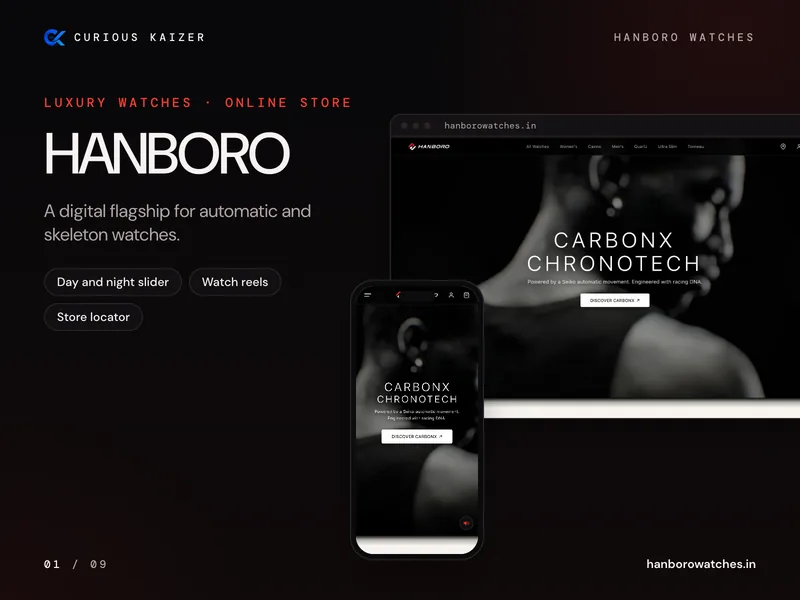
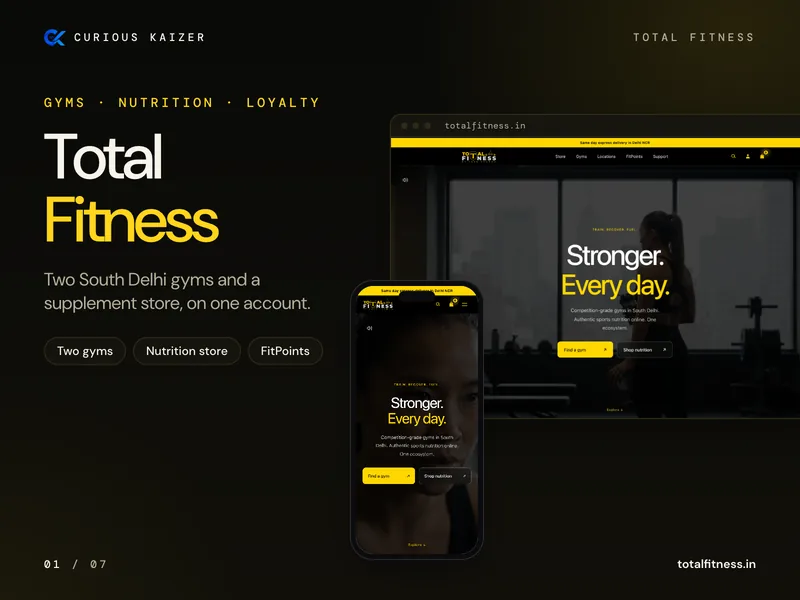
- Portfolio. HANBORO Watches and Total Fitness are live sites you can open, and each has a case study: HANBORO Watches and Total Fitness. Our client systems, such as the WatFix CRM, are private. Our pages show sample data for them and say so. More work is on our portfolio.
- Reviews. Our Google Business Profile shows 5.0 from 51 Google reviews as of November 2026. Read them with the questions above: what they say was built, how the dates are spread, and who the reviewers are.
- Prices. Our pricing page publishes starting prices: a business website from ₹15,200, an e-commerce store from ₹21,900 and a SaaS or web app from ₹33,900. A from price covers the smallest scope in its category, and the fixed price is stated in the written proposal. Check them against the ranges in the website development cost in India guide.
- In writing. Our projects are fixed price, with a written scope and milestones confirmed in the proposal. The pricing page lists source code handover and private repository handover, and support terms are confirmed in writing. As you would with anyone, ask who will be the registered owner of your domain and hosting accounts before you sign.
- Rankings. We do not guarantee Google rankings. What we implement on a page is described on our website designing company in Delhi page.
- Best in Delhi. We do not claim it, and we have not ranked anyone else here.
Questions about choosing a website design company
How do I choose a website design company?
Write one brief and send it to three companies. Then check that their portfolio sites are live and were built by them, read their Google reviews for specifics, compare quotes line by line, and get ownership of the domain, accounts and code in writing before you pay.
Which website design company is the best in Delhi?
No honest ranking can name one company that is right for every project. The right choice depends on what you are building, your budget, your deadline and the people doing the work. Shortlist three, run the portfolio, review and quote checks in this guide, and treat any list that does not explain its method with caution.
How can I check that a web design portfolio is real?
Open each project on its live address, then check who built it, look at its history in the Internet Archive and test the specific claims in the case study. Ask to speak to the client, and ask what the company did on each project. Private systems behind a login should be shown with sample data.
Who should own my website's domain and code?
You should hold the domain registration and the hosting accounts, and the contract should say how the source code and design files are handed over to you and when. Ownership is decided by the agreement, not by payment alone, so ask for it in writing.
Should I choose a freelancer, an agency or a website builder?
A website builder suits a simple site you will edit yourself. A freelancer suits a clearly defined site when you can verify their past work and know who supports it later. An agency suits a project that needs design, build and integrations from one team. Whichever you pick, compare written quotes for the same brief.
Can a website design company guarantee Google rankings?
No. Google's own guidance for hiring an SEO says no one can guarantee first place in its results. A company can list the on-page work it will do, such as titles, headings and a sitemap, but it cannot promise a position.
What should a website design quote include?
It should name the pages and templates, the features and integrations, the number of revision rounds, the price and taxes, the milestones and payments, the timeline, the handover of domain, hosting and code, and the support after launch. It should also say what is not included.
Ask us the same questions
Send us your one-page brief and put the questions from this guide to us. We will come back with a written scope and price. Delivery is remote from Delhi, so tell us where you are based and what hours suit you.
- Phone: +91 85951 21436
- WhatsApp: +91 85951 21436
- Email: jaigoel2206@gmail.com