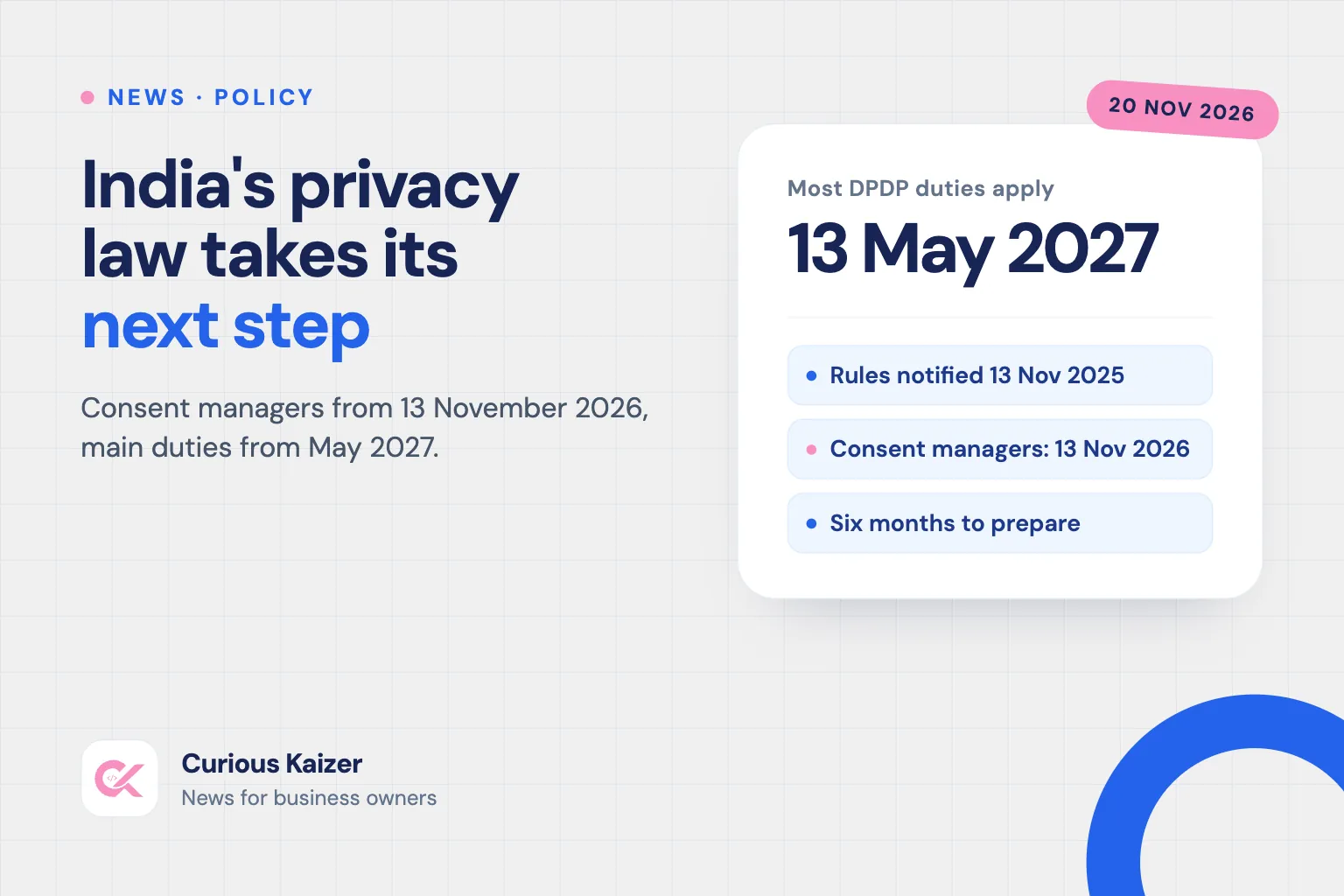
India's Digital Personal Data Protection law is arriving in stages. The DPDP Rules were notified on 13 November 2025. A year later, on 13 November 2026, the provisions for consent managers took effect. Most of the obligations on businesses that handle personal data apply from 13 May 2027, which leaves about six months to prepare.
Key points
- The DPDP Rules under the Digital Personal Data Protection Act, 2023 were notified on 13 November 2025.
- Provisions for consent managers, registered platforms that help people give, manage and withdraw consent, took effect on 13 November 2026.
- Most obligations on businesses, called data fiduciaries, apply from 13 May 2027.
- Those include clear notices, valid consent, security safeguards, breach reporting and honouring people's rights to access and erase their data.
- Start now: map what personal data you collect, why, where it is stored and who can see it.
The timeline
| Date | What applies |
|---|---|
| 13 November 2025 | DPDP Rules notified; Data Protection Board provisions |
| 13 November 2026 | Consent manager provisions |
| 13 May 2027 | Most obligations on data fiduciaries |
What consent managers do
A consent manager is a company registered with the Data Protection Board that gives people one place to see, give, review and withdraw the consents they have granted to different businesses. Instead of hunting through dozens of apps and websites, a person can manage permissions through the consent manager, which must keep records and act in the person's interest, not the business's. For businesses, it means consent may arrive, or be withdrawn, through a third party, and your systems need to respond.
What businesses must do by May 2027
- Clear notices. Tell people, in plain language, what personal data you collect and why, before or when you collect it.
- Valid consent. Consent must be free, specific, informed and unambiguous, with an easy way to withdraw. Pre-ticked boxes and bundled consents will not do.
- Security. Take reasonable safeguards, such as encryption, access controls and logs.
- Breach reporting. Report personal data breaches to the Data Protection Board and inform affected people.
- Rights. Let people access, correct and erase their data, and respond within set time limits.
- Retention. Delete data you no longer need for the purpose it was collected for.
What it means for your website
Most small businesses collect personal data through their website: contact forms, WhatsApp chats, newsletter sign-ups, analytics and ad pixels. Each needs a clear purpose, a notice and, often, consent. A cookie banner that only says "OK" is not enough. Build consent records into your forms and CRM now, so you can show when and how each person agreed.
This is a summary for business owners, not legal advice. For complex data processing, speak to a privacy lawyer.
Questions readers ask
When do the DPDP Rules apply to businesses?
Most obligations on data fiduciaries apply from 13 May 2027. Consent manager provisions took effect on 13 November 2026.
What is a consent manager under DPDP?
A company registered with the Data Protection Board that lets people give, manage, review and withdraw their consent to different businesses through one platform.
Does the DPDP Act apply to small businesses?
Yes. It applies to any business that processes digital personal data, though the government can exempt certain classes of businesses from some provisions.
Sources and method
We report what official releases, company filings and established news outlets published up to 20 November 2026, and say so where reports differ. Figures can be revised; check the original source before you act on them.
- Ministry of Electronics and Information Technology, Digital Personal Data Protection Rules, 2025, notified 13 November 2025.
- Digital Personal Data Protection Act, 2023.
- Law firm commentary on the phased DPDP timeline.
This is news and general information for business owners, not investment, tax or legal advice.
Stay compliant without the headache
We build websites and systems with consent, records and the right notices built in, so new rules are an update, not a rebuild.