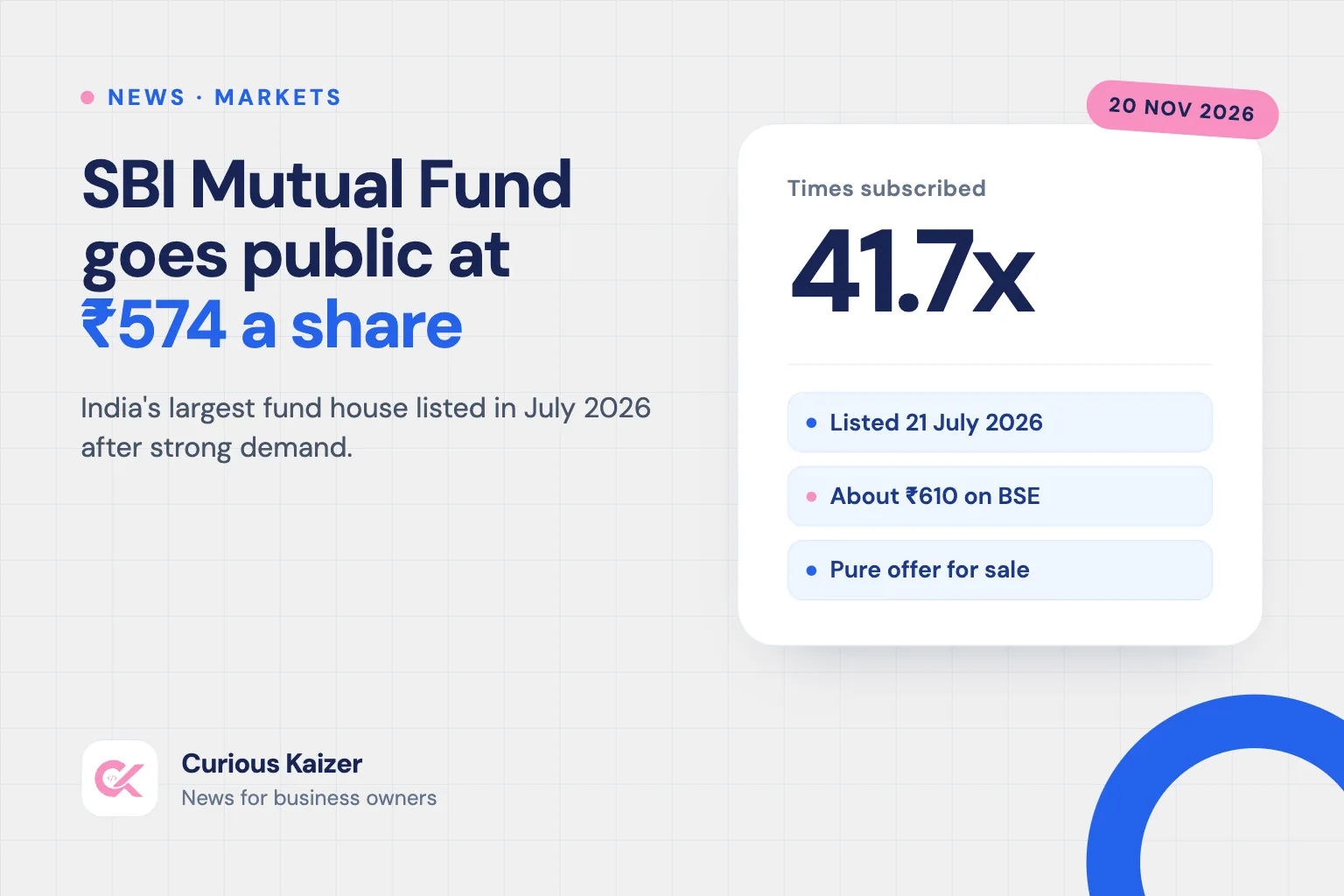
SBI Funds Management, the asset manager behind SBI Mutual Fund, listed on the stock exchanges on 21 July 2026. Its shares opened at ₹610 on the BSE and ₹613.30 on the NSE, a premium of about 6–7% over the issue price of ₹574, after the IPO was subscribed about 41.7 times. The sale later gave SBI a large one-time gain in its quarterly results.
Key points
- The IPO ran from 14 to 16 July 2026 at an issue price of ₹574.
- It was a pure offer for sale by the existing owners, SBI (61.91% before the IPO) and Amundi (36.36%). No new money went to the company.
- It was subscribed about 41.7 times.
- Shares listed on 21 July at ₹610 on BSE and ₹613.30 on NSE, valuing the company at about ₹1.27 lakh crore.
- SBI booked a one-time gain of about ₹7,288 crore from the sale in its July–September results, as reported.
The numbers
| Item | Detail |
|---|---|
| Draft prospectus | 19 March 2026 |
| Subscription | 14–16 July 2026 |
| Issue price | ₹574 |
| Type | Offer for sale by SBI and Amundi |
| Demand | About 41.7 times subscribed |
| Listing, 21 July 2026 | ₹610 (BSE), ₹613.30 (NSE) |
| Market value at listing | About ₹1.27 lakh crore |
Reports differ on the exact size of the offer, so we have left it out.
Why investors wanted it
SBI Mutual Fund is India's largest fund house by assets. Asset managers earn fees on the money they manage, so their income grows as more Indians invest through SIPs and mutual funds. Investors have rewarded listed fund houses for that steady, fee-based growth, and SBI's distribution through its huge branch network is a strong advantage.
What an offer for sale means
In an offer for sale, existing shareholders sell some of their shares to the public. The company itself does not raise money. Here SBI and Amundi sold part of their holdings; SBI remains the controlling shareholder. That is why the gain showed up in SBI's own results rather than as new capital for the fund house.
Why it matters
The listing is part of a busy year for Indian IPOs, including the much larger Jio Platforms issue in October. For business owners, the lesson from fund houses is the value of recurring revenue: investors pay more for predictable income. If your business can move from one-off sales to retainers, subscriptions or maintenance plans, it becomes more valuable. This article is information, not investment advice.
Questions readers ask
When did SBI Funds Management list?
On 21 July 2026, at ₹610 on the BSE and ₹613.30 on the NSE.
What was the SBI Mutual Fund IPO price?
The issue price was ₹574 per share.
Did SBI Funds Management raise new money?
No. It was a pure offer for sale, in which SBI and Amundi sold some of their existing shares.
Sources and method
We report what official releases, company filings and established news outlets published up to 20 November 2026, and say so where reports differ. Figures can be revised; check the original source before you act on them.
- NSE and BSE listing data for SBI Funds Management, 21 July 2026.
- IPO coverage by Indian business media, July 2026.
- Reports on SBI's Q2 FY27 results, 3 November 2026.
This is news and general information for business owners, not investment, tax or legal advice.
Build recurring revenue
We build subscription, membership and client-portal systems that turn one-off sales into repeat income.