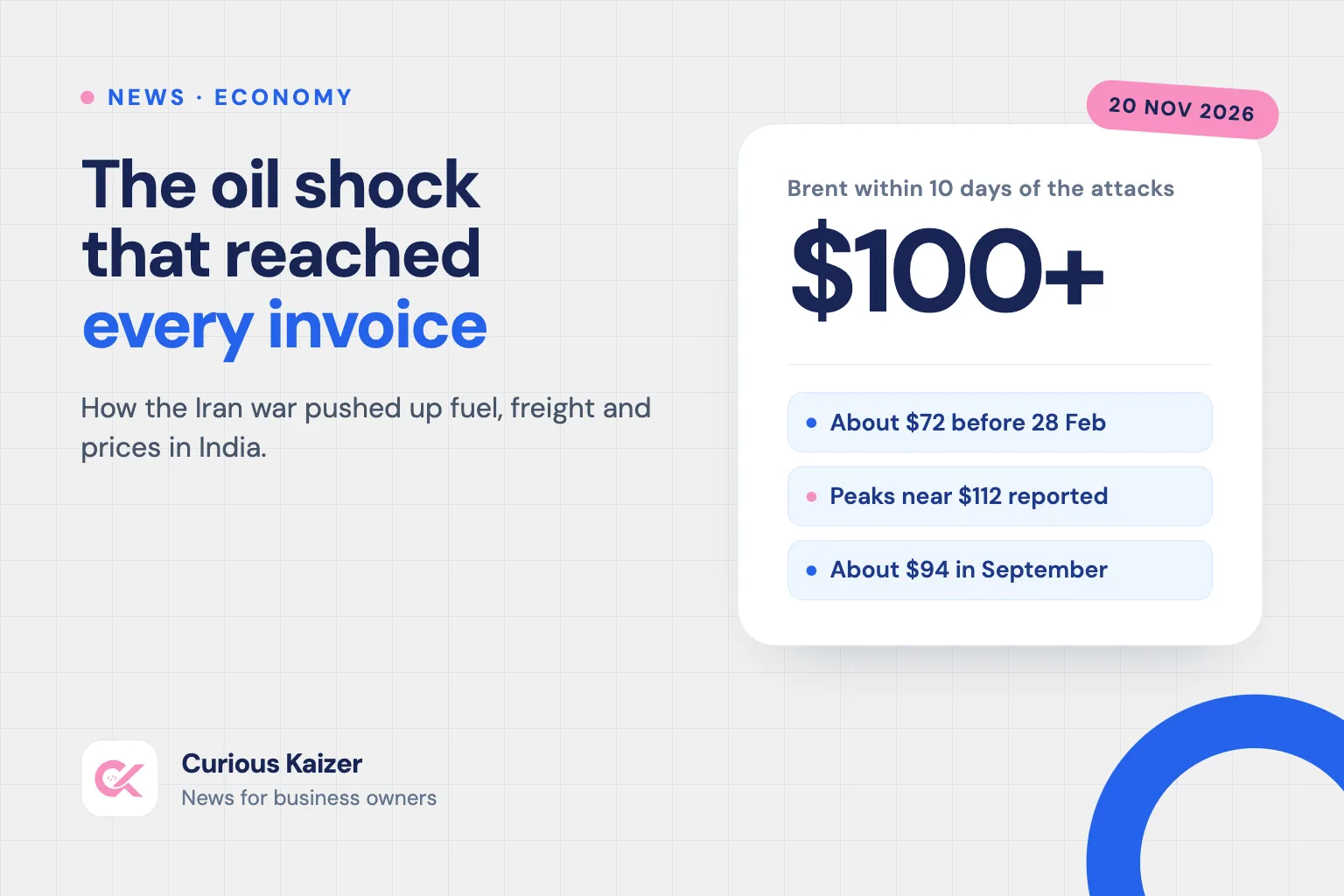
Most of this year's economic news in India traces back to one event. After US and Israeli attacks on Iran on 28 February 2026, oil prices jumped. Brent crude, about $72 a barrel before the attacks, crossed $100 within ten days, and some reports put the peak near $112. India imports most of its oil, so the shock fed straight into inflation, the rupee and the cost of doing business.
Key points
- Brent crude rose from about $72 before the attacks of 28 February 2026 to more than $100 within ten days, with peaks near $112 reported.
- Shipping through the Strait of Hormuz was disrupted, and drone attacks on Qatar's Ras Laffan in early March halted LNG output there.
- A June ceasefire unravelled. Brent was still near $94 in September.
- India cut fuel taxes to soften the blow and held about eight weeks of petroleum stocks.
- The shock is behind higher inflation, a record-low rupee and the RBI's October rate increase.
What happened to oil
| When | Brent crude |
|---|---|
| Before 28 February | About $72 a barrel |
| Within ten days of the attacks | Above $100 |
| Reported peak | About $112 |
| September 2026 | About $94 |
The Strait of Hormuz carries a large share of the world's oil and liquefied natural gas. Disruption there, along with drone attacks that halted LNG production at Qatar's Ras Laffan complex in early March, hit both oil and gas supplies. A ceasefire in June did not hold, and prices have stayed well above pre-war levels.
How it reached India
- Inflation. Fuel and freight costs feed into almost everything. Retail inflation rose above 6% in October.
- The rupee. A bigger oil bill means more demand for dollars. The rupee hit record lows near 96.
- Trade deficit. India's goods trade deficit reached about $39.88 billion in October, a one-year high, largely because of crude prices.
- Interest rates. The RBI raised its repo rate in October for the first time since 2023.
- Government response. Fuel tax cuts limited the rise in pump prices, and strategic stocks gave a buffer of about eight weeks.
Where businesses feel it
Logistics, travel, plastics and packaging, chemicals, food and anything delivered by truck feel it first. Restaurants pay more for gas. Even digital businesses feel it through a weaker rupee and dearer imported hardware.
Practical steps: renegotiate freight with fuel-linked clauses rather than fixed prices, consolidate deliveries, review packaging weight, and track your cost per order closely. Systems that show margins by product and channel make it obvious where to raise prices and where to cut.
Questions readers ask
How high did oil prices go in 2026?
Brent crude rose from about $72 before 28 February 2026 to more than $100 within ten days, with peaks near $112 reported. It was near $94 in September.
Why does the Iran war affect India?
India imports most of its oil. Higher prices raise inflation, weaken the rupee and widen the trade deficit.
What has the Indian government done?
It cut fuel taxes to limit pump price rises and relies on strategic petroleum stocks of about eight weeks.
Sources and method
We report what official releases, company filings and established news outlets published up to 20 November 2026, and say so where reports differ. Figures can be revised; check the original source before you act on them.
- Reports on Brent crude prices from Reuters, Bloomberg and business media, February to September 2026.
- Reports on attacks affecting Qatar's Ras Laffan LNG facility, March 2026.
- Ministry of Commerce trade data for October 2026, as reported.
This is news and general information for business owners, not investment, tax or legal advice.
Know your margins, live
We build dashboards that show cost, price and margin by product and channel, so you can act the week costs move.