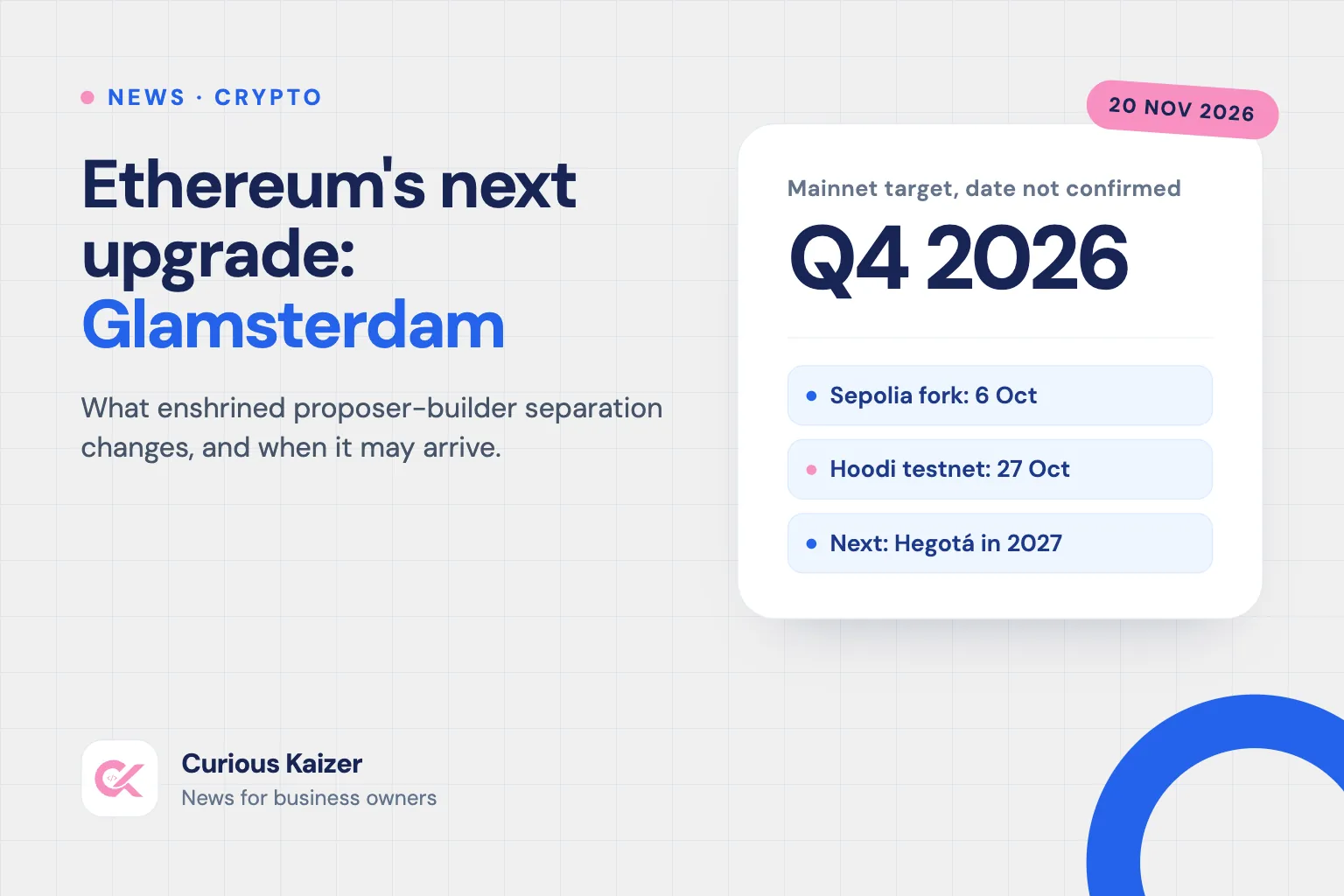
Ethereum's next major network upgrade, called Glamsterdam, is being tested. It moves a key part of how blocks are built into the protocol itself and aims to let the network process more transactions. Testnet upgrades were scheduled for October 2026, and ethereum.org lists mainnet for the fourth quarter of 2026, with the date not yet confirmed.
Key points
- Glamsterdam's headline change is enshrined proposer-builder separation (ePBS), built into the protocol rather than handled by outside software.
- Developers are working towards a much higher gas limit, with a target of 200 million discussed, so more transactions fit in each block.
- The Sepolia testnet fork was targeted for 6 October and the Hoodi testnet for 27 October 2026.
- Mainnet is listed for Q4 2026, date not confirmed. The upgrade has already slipped from an earlier first-half 2026 target.
- The following upgrade, Hegotá, is planned for 2027.
Why it is called Glamsterdam
Ethereum upgrades combine changes to two layers of the network: the execution layer, where transactions run, and the consensus layer, where validators agree on blocks. Each layer's upgrade has its own name. "Glamsterdam" joins Amsterdam, the execution-layer upgrade, with Gloas, the consensus-layer one.
What ePBS does
Today, most Ethereum blocks are assembled by specialised "builders" and proposed by validators, with the hand-off managed by third-party software called relays. Users have to trust those relays. Enshrined proposer-builder separation builds the hand-off into Ethereum itself, removing that trust and making block production more robust. It also gives the network more time to process each block, which helps support a higher gas limit.
The timeline
| Stage | Timing |
|---|---|
| Original target | First half of 2026 (missed) |
| Sepolia testnet fork | Targeted for 6 October 2026 |
| Hoodi testnet fork | Targeted for 27 October 2026 |
| Mainnet | Q4 2026, date not confirmed |
| Next upgrade (Hegotá) | 2027 |
Why it matters
For people building on Ethereum, a higher gas limit should mean more room for transactions and, in time, lower fees during busy periods. For businesses that only use Ethereum indirectly, through stablecoins or payment providers, the upgrade should be invisible, which is how infrastructure upgrades ought to work. If you run software that interacts with Ethereum, follow the client release notes and test on testnets before mainnet.
Questions readers ask
When is the Ethereum Glamsterdam upgrade?
Ethereum.org lists mainnet for Q4 2026 with the date not confirmed. Testnet upgrades were targeted for 6 and 27 October 2026.
What is ePBS?
Enshrined proposer-builder separation: building the split between block builders and block proposers into Ethereum's protocol, instead of relying on third-party relay software.
Will Glamsterdam lower Ethereum fees?
It aims to raise capacity through a higher gas limit, which can ease fees at busy times, but fees also depend on demand.
Sources and method
We report what official releases, company filings and established news outlets published up to 20 November 2026, and say so where reports differ. Figures can be revised; check the original source before you act on them.
- ethereum.org, roadmap and upgrade pages.
- Ethereum core developer call notes and Ethereum Foundation blog posts on Glamsterdam testnet schedules, 2026.
This is news and general information for business owners, not investment, tax or legal advice.
Building in Web3 or fintech?
We build secure dashboards, onboarding flows and internal tools for finance and crypto businesses, with audits and access controls built in.